
Email revenue up 11x in two months — when the biggest problem was time
A fashion e-commerce store averaging ~$20K a month used email the way most stores do: every now and then, whenever there was time, they'd send a one-off newsletter. Automations — zero. The owners' problem wasn't a lack of knowledge, it was simply time: the newsletter always lost out to orders, inventory, and customers. Below is what happens when the channel is taken over by a system that doesn't need any.
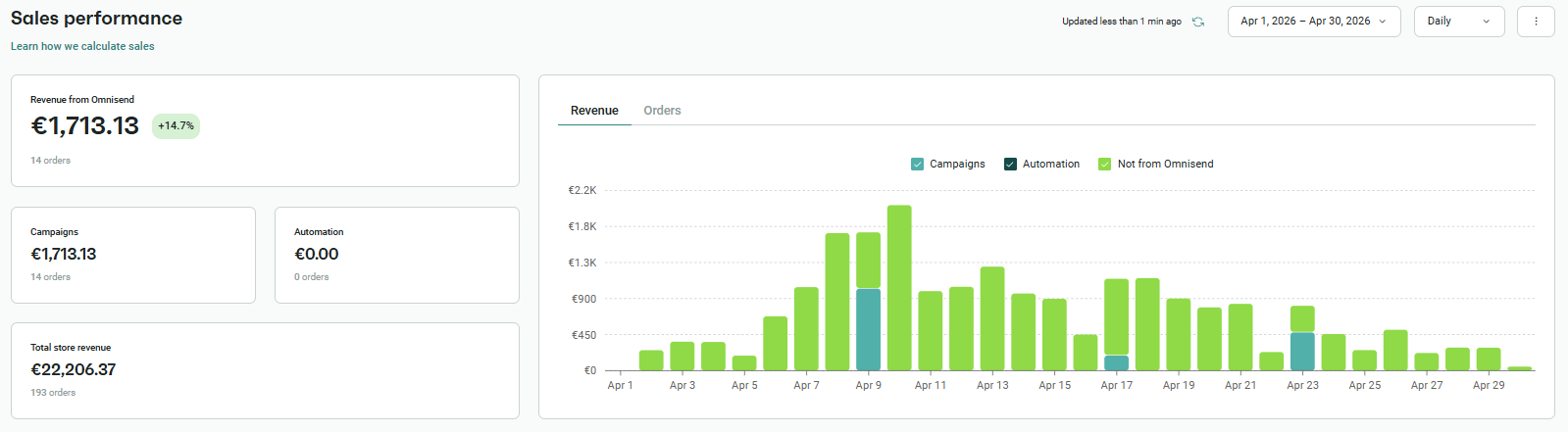
7.7% of $22,206 revenue · 14 of 193 orders
- Occasional newsletters "whenever there was time"
- Automations: $0 (there were none)
- The entire channel ran on manual work
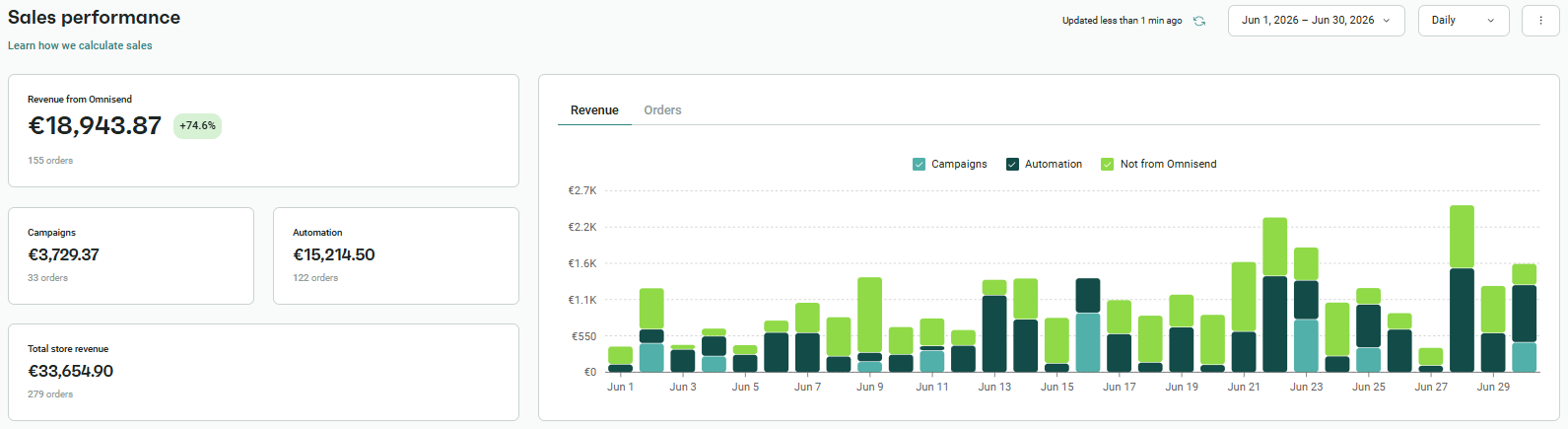
56.3% of $33,655 revenue · 155 of 279 orders
- Automations: $15,215 (122 orders)
- Campaigns: $3,729 (33 orders)
- Client's time investment: ~0 hours
The situation before
The April report tells a familiar story: $1,713 from email — every cent of it from campaigns sent by hand, whenever the owners could spare an evening. The automations line: $0. That means every abandoned cart, every new subscriber, every customer after checkout — silence. The channel only worked when a human had time to switch it on.
In fashion, that's especially painful: purchases are emotional and repeat-driven, customers come back for new collections — but only if someone reminds them.
What we did
- The automation foundation within the first days of work: welcome series, abandoned cart and abandoned checkout flows, post-purchase emails — following our 7-flow system;
- Signup forms — so the list grows without ad spend;
- Took over the campaign calendar: regular weekly newsletters — new collections, outfit ideas, offers. Copy, design, sending — all on our side;
- Deliverability and segment upkeep in the background.
The client's role after launch: a monthly report and a quick sync on what's new in the range. That's it.
The results in numbers
Look closely at the June chart: the dark green bars (automations) appear almost every single day — that's revenue that comes in regardless of whether anyone "worked on marketing" that day. In the April chart, they simply aren't there.
What this case teaches
"I don't have time" is an argument for automations, not an obstacle. This client's problem was never strategy — they knew email worked (even the rare newsletters drove sales). The problem was that the channel demanded their hours. Automations flip that equation: 80% of June's email revenue came from emails that never needed to be touched again after launch.
One-off newsletters are just the tip of the iceberg. April's $1,713 shows what the channel produces running at a fraction of its capacity. The gap to $18,944 isn't "better emails" — it's all the moments (an abandoned cart, a new subscriber, a past purchase) that manual sending physically cannot cover.
An honest note: total revenue also grew in June ($22.2K → $33.7K) — part of that growth is the email channel itself, which drove 155 orders, but seasonality and other channels contributed too. And the 56% share is an exceptionally strong month — over the long run, the healthy norm we aim for is a steady 20–30%. The point isn't the peak, it's the shift: a channel that made 7.7% and ate the owners' evenings now drives half the revenue with zero effort from them.
Sound familiar? "I know I should, but there's never time"
These are exactly the businesses we work for: the system launches within the first days, and from then on it doesn't need your time. In a free consultation we'll show you how much your store is currently leaving on the table.
Book a free consultation