
The holidays when email drives nearly half of all sales
In a normal month, a healthy email channel drives 20–30% of revenue, and automations do most of the work. But there are periods when everything flips: holidays. In this case study — how Women's Day and Mother's Day campaigns each brought one e-commerce store $28–32K in two weeks, i.e. 44–46% of total revenue — and why campaigns outperform automations during the holidays.
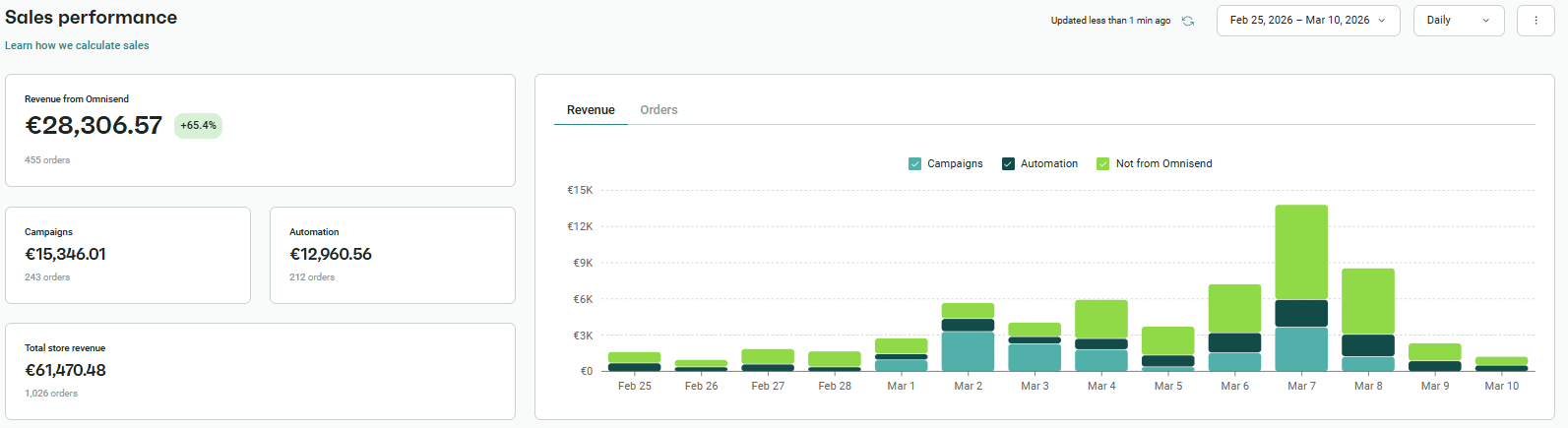
46.0% of $61,470 revenue · 455 of 1,026 orders
- Campaigns: $15,346 (243 orders)
- Automations: $12,961 (212 orders)
- Peak days — March 7–8 (last minute)
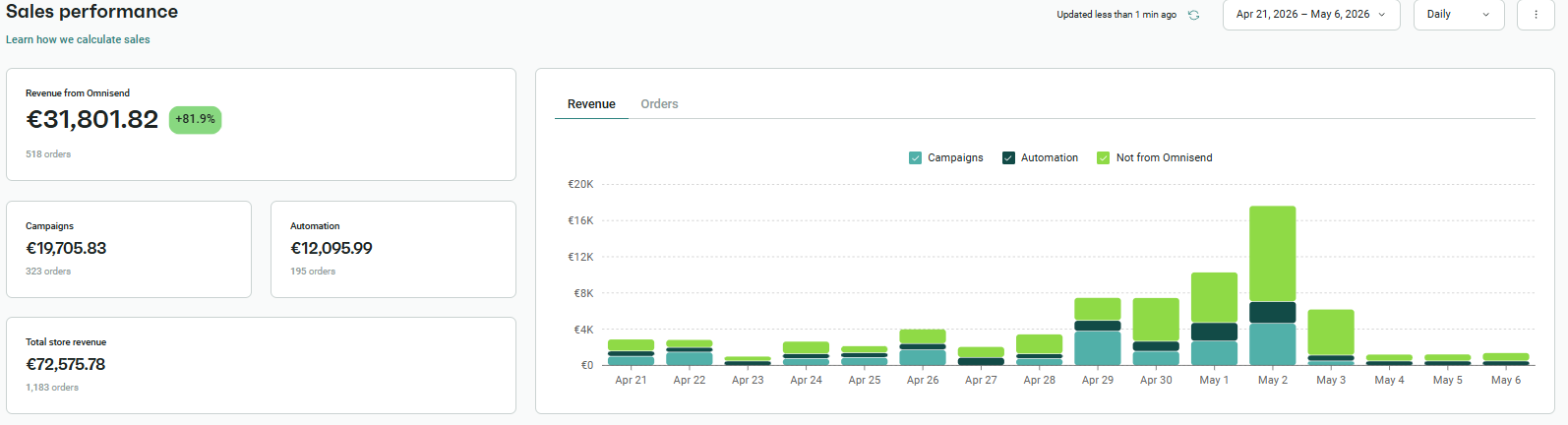
43.8% of $72,576 revenue · 518 of 1,183 orders
- Campaigns: $19,706 (323 orders)
- Automations: $12,096 (195 orders)
- Peak days — April 29 – May 2
Why campaigns outperform automations during the holidays
In our first case study, automations drove 87% of email revenue — that's the norm for a regular month. Here the picture is different: in the Women's Day window, campaigns brought in 54% of email revenue; in the Mother's Day window, 62%.
The reason is simple: automations react to shopper behavior, but during the holidays purchase intent is created by the date, not the behavior. People need a gift by a specific day — and the brand that lands in their inbox at the right moment with the right offer wins. No automation can do that for you — it takes a planned campaign series.
The holiday series formula we used
| When | Goal | |
|---|---|---|
| ~10–14 days before | Announcement / gift guide | Catch the early planners; "gift ideas for mom" style content |
| ~7 days before | Bestseller reminder | Social proof: what others are gifting + reviews |
| ~4–5 days before | Shipping deadline | "Order by day X so your gift arrives on time" — the strongest email in the series |
| 1–2 days before | Last minute | A solution for latecomers: gift cards, in-store pickup, express delivery |
Both reports show the same pattern: the biggest spikes come 1–2 days before the holiday (March 7–8 and April 29 – May 2). Shoppers buy gifts at the last minute — and email is the only channel that reaches them at that last minute for a few cents, not at auction prices like paid ads.
An important detail: holiday campaigns don't replace automations — they work together. Holiday traffic fills the abandoned cart and welcome flows with new people, which is why automation revenue in these windows ($12–13K) was also higher than usual. Campaigns bring people in, automations close the sale.
How to apply this to your store
- Build a holiday calendar for the year: Valentine's Day, seasonal sales, Women's Day, Mother's and Father's Day, back to school, Black Friday, Christmas. Each gets a series, not a single email.
- Plan 2–3 weeks ahead — the announcement email needs to go out 10–14 days before, which means the content is produced even earlier.
- A clear shipping deadline — the "order by Wednesday, get it before the holiday" email almost always ends up the most profitable in the series.
- Have a last-minute answer — an emailed gift card saves the shoppers who can no longer make physical delivery (and extends your peak right up to the morning of the holiday).
An honest note: 44–46% are the figures for the two-week holiday windows, not a full-month average. In regular periods this client's email share sits in the normal 20–30% zone. Holidays are a peak, not the norm — but that's exactly why you can't sleep through them: a few well-planned weeks deliver a month's worth of extra revenue.
Don't sleep through the next big holiday
Holiday campaign planning, copy, design, and segments are a standard part of our monthly package. In a free consultation we'll show you which upcoming dates are most valuable for your niche.
Book a free consultation