
"We already do email marketing" — the channel grew 1.9x once we fixed it
This client was no beginner: a supplements e-commerce store that sent the occasional newsletter (1–2 a month) and had a few automated flows running. Email already drove 37% of revenue — most people would say "it works, don't touch it". But the owners were short on both time and know-how to set everything up properly — and they sensed the channel was delivering less than it could. They were right: once we rebuilt the system, it nearly doubled.
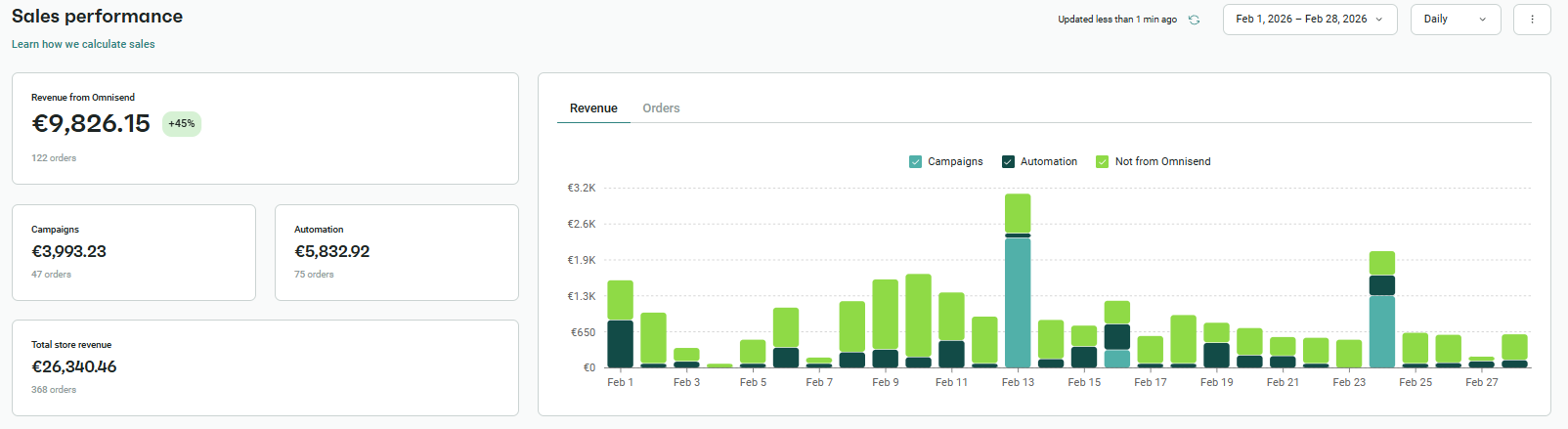
37.3% of $26,340 revenue · 122 of 368 orders
- Newsletters: 1–2 a month, irregular
- A few basic automated flows
- Campaigns: $3,993 · Automations: $5,833
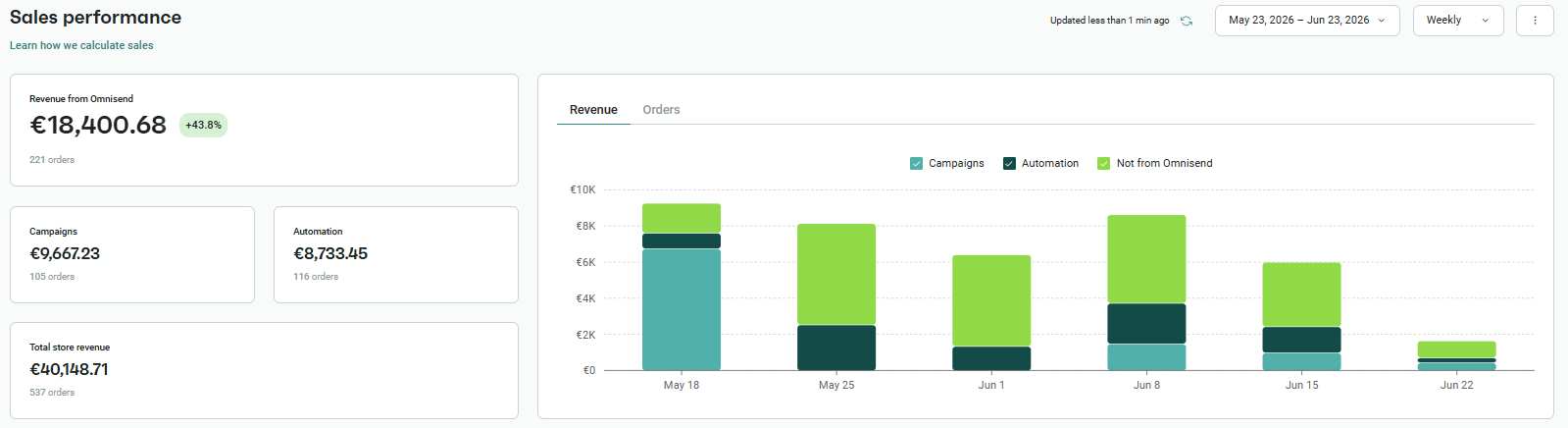
45.8% of $40,149 revenue · 221 of 537 orders
- Regular campaigns every week
- Flows rebuilt and expanded
- Campaigns: $9,667 · Automations: $8,733
The situation before: "it works" doesn't mean "it's maxed out"
The February report looks perfectly respectable — $9,826 from email. But under the surface were the typical gaps of a DIY setup: flows too short (2–3 emails where a full system uses 5–7), no exit conditions or segmentation, and campaigns living on a "whenever there's time" rhythm — 1–2 a month, with no calendar and no testing. In the supplements niche that's especially costly: the product is consumable, the customer naturally comes back every 30–60 days — but only if someone reminds them at the right time.
What we did
- Rebuilt the automations around our 7-flow system: expanded the existing flows, added the missing ones — and, crucially for supplements, replenishment logic in the win-back sequence, synced to the product's consumption cycle;
- Introduced campaign regularity: from 1–2 a month to a campaign every week — ingredient education, protocols, offers (why this works — a separate article);
- Segmentation: buyers grouped by product category and purchase cycle — a supplements customer gets an email about their product, not everything at once;
- Took over all production — copy, design, sending, reporting. The time and know-how problem disappeared together.
The results in numbers
The most interesting detail of this case: the biggest jump came not from automations but from campaign regularity ($3,993 → $9,667). The automations already existed and were doing some work — but the weekly campaign rhythm was a completely untapped reserve. That's the mirror image of the fashion store case — and a reminder that there's no one-size-fits-all recipe: an audit first shows you which side of the channel is hungry.
What this case teaches
"We already do email marketing" usually means "we do half of it". This client reached 37% with a DIY setup — a serious result that would convince most people they'd hit the ceiling. The rebuilt system showed the ceiling was nearly twice as high: +$8,575 every month from the same list and the same customers.
For consumable products, email isn't a channel — it's the engine. Supplements, coffee, cosmetics: when the customer naturally returns every month or two, a well-timed reminder is half the sale. That's why in this niche a healthy email share sits at 35–45% — above the usual 20–30% norm.
An honest note: the periods compared are different (February vs a May–June window), and total revenue also grew over that time thanks to other channels and seasonality. But the channel's share (37% → 46%) and the absolute growth (+87%) point to the same thing: the main change happened inside the email channel — mostly in the campaigns line, which grew 2.4x.
Doing email marketing, but sense it isn't giving you everything?
In a free consultation we'll review your existing flows and campaigns — and show you exactly which side of the channel is currently hungry.
Book a free consultation